
Norway has banned the transport of electric cars by ferry - here's what Jadrolinija says
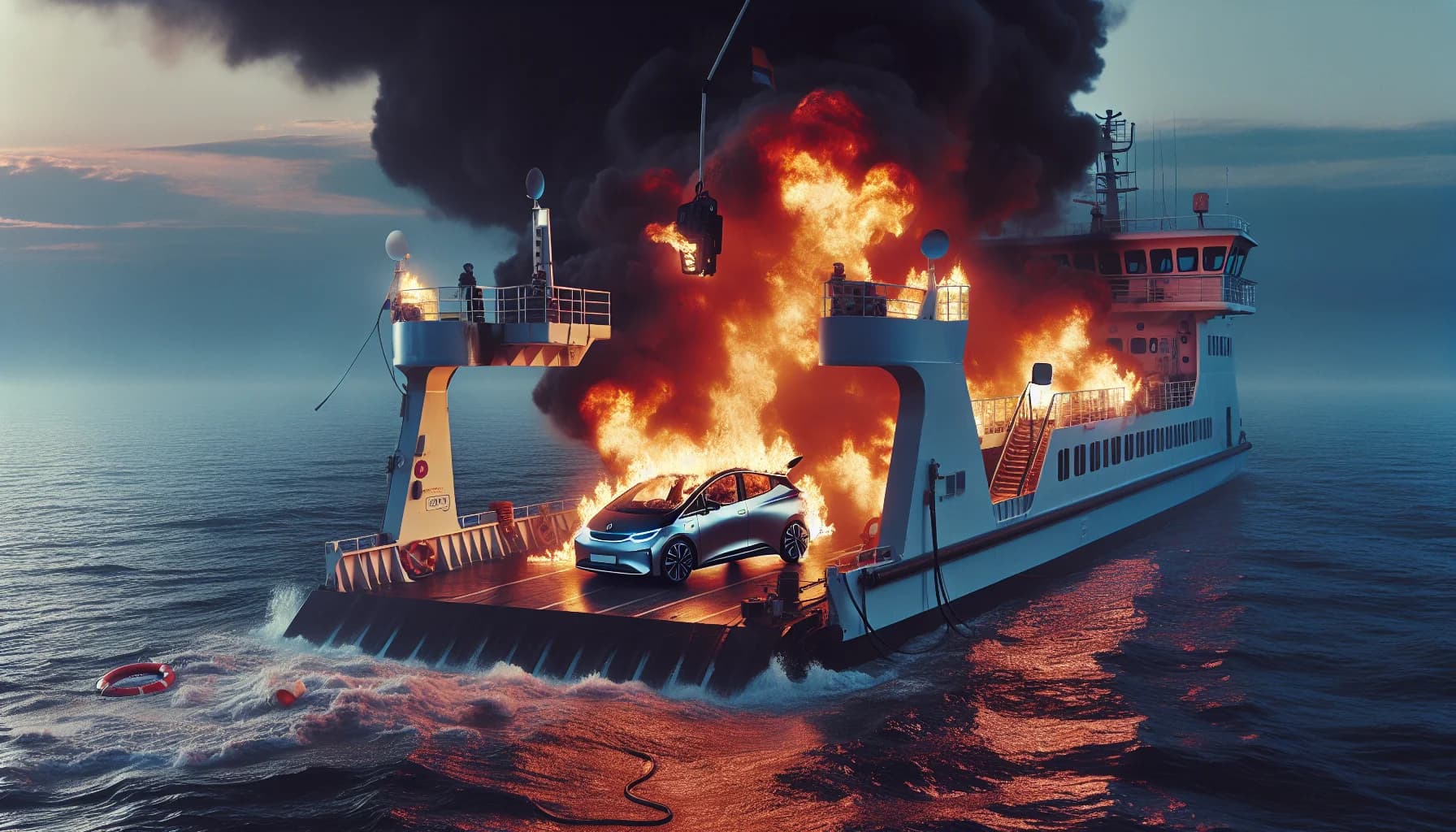

Electric cars pose a great danger to ferry transport, given that fires on them are practically impossible to extinguish. Norway has completely banned their transport by ferries, and other countries are also introducing restrictions. Here is what the Croatian carrier Jadrolinija says.
Extinguishing a fire on an electric car is extremely dangerous and very complex, and cannot be extinguished as easily as a fire on an internal combustion car. The main danger comes from lithium-ion batteries and their specific way of burning. If such a fire occurs on a ferry, it is a major hazard that requires a quick response, specialized equipment and coordination with emergency services on land to ensure the safety of passengers, crew and the vessel itself. This is precisely why many countries today set strict restrictions on the transport of electric cars, as well as the equipment that every ferry that transports vehicles must have.
As reported by the portal Morski.hr, they asked our largest shipping company, Jadrolinija, if they have fire blankets (fireproof blankets) and other specialized fire extinguishing equipment, and what are the rules for transporting electric cars and other electrically powered vehicles?
Ten ships have fire protection covers
"Jadrolinija proactively approaches all aspects of safety related to the transport of electric vehicles on its ferries. After the EMSA guidelines for the transport of electric vehicles were published in 2023, Jadrolinija issued an internal circular that gave ship crews detailed instructions on how to proceed when boarding and disembarking electric vehicles, as well as how to proceed in the event of a fire."
As part of these measures, the process of procuring special blankets for covering vehicles affected by the fire was also initiated. To date, 10 ships have been equipped with the mentioned blankets, while the procurement of an additional 30 pieces is underway, which will ensure that all ships in the fleet that transport cars will be fully equipped with this safety equipment.
It is forbidden to bring and charge the batteries of mobile phones and bicycles into passenger lounges
"Additionally, Jadrolinija introduced new measures this year that prohibit the introduction and charging of batteries of electric scooters and bicycles into passenger lounges and passenger accommodation areas. Passengers are clearly informed about the aforementioned measures via safety stickers that are displayed in visible places on all ships of the fleet."
Electric romobils in catamarans exclusively in fireproof bags
On catamarans, electric scooters are allowed only if they are placed in fireproof bags provided for this purpose, and each vessel is equipped with one such bag.
In addition, Jadrolinija actively participates in the working group of the Ministry of the Sea, Transport and Infrastructure, which is working on the creation of national guidelines for the transport of electric vehicles by sea, with the aim of further improving the safety of passengers and property. This year, Jadrolinija also participated in the International Firefighting Seminar, where the main topic was how to act in the event of an electric vehicle fire.
Solving problems in other European countries
There is no standardized European regulation on the transport of electric cars on ferries. Decisions depend on each shipping company's risk assessment, vessel type, route and available firefighting equipment. But here are examples in some European countries:
Norway - The Norwegian company Havila Kystruten has introduced a complete ban on the transport of electric, hybrid and hydrogen cars on its ferries and coastal routes. They cite risk assessment as the reason, noting that a fire on an EV would require different and more extensive extinguishing measures than those available on their specific ships.
Sweden, Germany, Denmark - In these countries, most ferry operators transport EVs, but often with special protocols. This may include requiring the car's battery to be charged to a certain percentage (e.g. no more than 50%), parking in specially designated, open decks with better ventilation, or requiring the vehicle type to be declared when booking.
Mediterranean countries (Italy, Greece) - Similar individual measures apply here too, with an emphasis on safety protocols and equipment for extinguishing lithium-ion fires on board.
Source: Morski.hr